Every time you look at a SamaraBoT robotic arm, you see the motors, the wires, the gripper, and the bright blue arms that move. What you do not see is the small army of screws holding everything together.
Those screws are not just any screws. They are stainless steel screws — and without them, the entire arm would fall apart within minutes.
In this article we explain what stainless steel screws are, why SamaraBoT uses them, and what students learn from them while building their first robot.
What are stainless steel screws?
A stainless steel screw is a threaded fastener made from an alloy of steel that contains chromium. That chromium is what makes the steel “stainless” — it forms a thin, invisible layer on the surface that protects the metal from rust and corrosion.
Ordinary steel screws rust quickly when they touch moisture in the air, especially in humid places or when handled by many students with sweaty hands. Stainless steel screws do not. They stay clean, shiny, and strong for years, even in a busy classroom.
There are different grades of stainless steel. The one most often used in small electronics and robotics is called A2-70, also known as 304 stainless steel. It is strong, easy to find, and resists rust extremely well.
Why does SamaraBoT use stainless steel screws?
When we designed the SamaraBoT arm, we had three requirements for every screw:
1. It has to hold tightly, permanently.
A robotic arm moves thousands of times during a single workshop. If a screw loosens by even a fraction of a millimeter, the joint develops play — and that play destroys precision. Stainless steel screws hold their torque and do not stretch or deform easily.
2. It has to survive many hands.
SamaraBoT is built, disassembled, and rebuilt by students. Every time a screw is inserted and removed, it faces wear. Stainless steel resists stripping and rounding much better than softer metals, so the same screws can be used over and over without needing replacement.
3. It has to look clean and professional.
We want students to feel proud of what they build. A screw that rusts after a week makes any project look unfinished. Stainless steel keeps the arm looking new, which matters when the same robot is used in many workshops over many months.
What do these screws actually hold together?
Inside SamaraBoT, stainless steel screws do very different jobs depending on where they are placed:
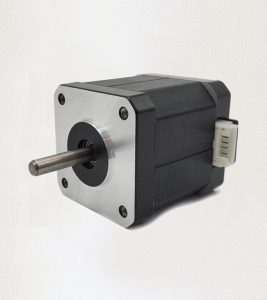
- Motor mounts: each stepper motor is fixed to its bracket with screws that must resist constant vibration.
- Joint assemblies: the moving parts of the arm are held together by screws that allow rotation without loosening.
- Gripper jaws: the small screws that hold the gripper jaws must survive repeated opening and closing.
- Base plate: the heaviest screws hold the base of the arm to its platform, where the whole weight of the robot is carried.
- Control board: small screws keep the electronics in place so that no wire comes loose during movement.
Each of these jobs has a different load, a different vibration level, and a different risk if the screw fails. That is why the screw choice matters so much.
Why is the small size important?
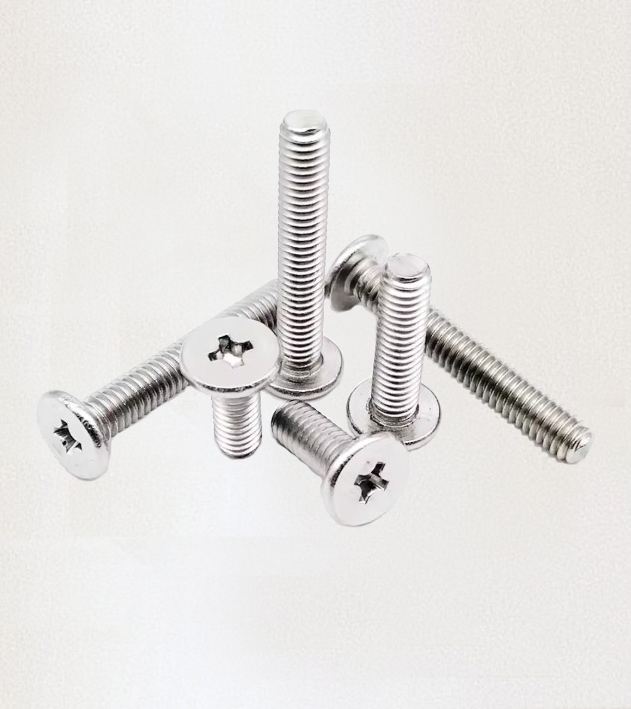
If you look closely at the screw in the picture, you will see it has a very flat, wide head. This type of screw is called a wafer head or ultra-thin flat head screw.
Why does that matter?
A wafer head sits almost completely flat against the surface it is holding. In a small robotic arm, every millimeter of space counts. A screw that sticks out could:
- catch on a wire,
- block a moving part,
- or prevent two surfaces from fitting tightly.
The wafer head solves this problem. It holds with the same strength as a normal screw, but with an almost invisible profile. This is one of the many small design decisions that make a robot feel solid and professional instead of loose and improvised.
What does a student learn from a stainless steel screw?
A screw is one of the oldest inventions in human history. But building a robot with them teaches lessons that go far beyond mechanics:
Material matters.
Two screws can look identical but behave completely differently. One rusts, the other does not. One strips, the other holds. Learning to recognize the right material is a real engineering skill.
Torque is a language.
A screw that is too loose causes vibration. A screw that is too tight damages the thread or the part it holds. Students learn to feel the right tightness — a skill that transfers to every machine they will ever work on.
Every part has a job.
A screw in the base carries the whole arm’s weight. A screw in the gripper only holds two small jaws together. They are not interchangeable. The design of the robot reflects what each part must do.
Small parts, big consequences.
If one screw is missing, the arm may still move — but the joint will wobble, the precision will drift, and the program will fail. Students learn that quality is not about the biggest part; it is about every part working together.
A quiet guarantee of quality
When a student tightens the last screw on a SamaraBoT arm, they are doing more than assembling a machine. They are putting their trust in every small part they just installed — including those stainless steel screws that will never be seen, never be noticed, and never stop working.
That is the real lesson behind every stainless steel screw in SamaraBoT.