Every joint in a robotic arm has to rotate. But two pieces of metal rubbing directly against each other would grind, heat up, and wear out within hours. That is where a bearing comes in.
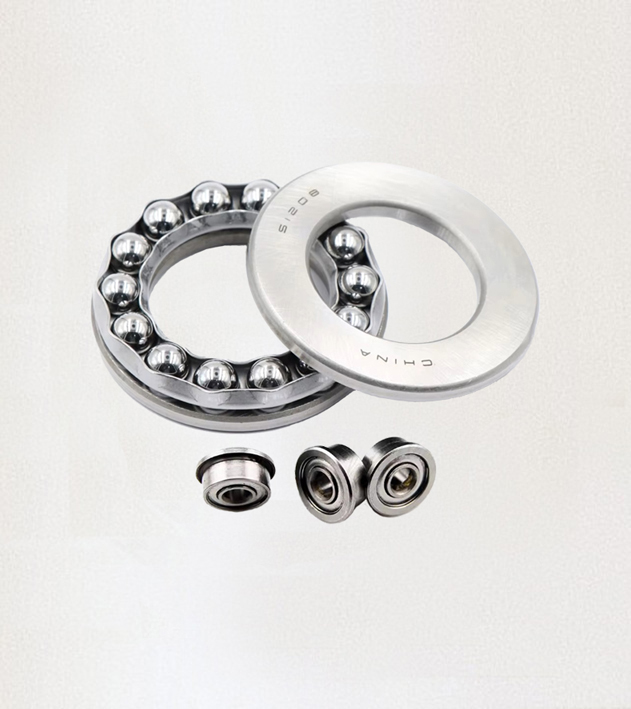
A bearing is a small mechanical component that sits between two moving parts. Instead of letting the surfaces slide against each other, it introduces rolling elements — tiny balls or cylinders — that carry the load and let the joint turn with almost no friction.
Think of it like this: sliding a heavy box across a floor is hard. Putting it on wheels makes it easy. A bearing is the wheel inside a robotic joint.
Why SamaraBoT needs bearings
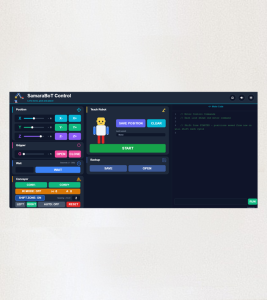
SamaraBoT is a desktop robotic arm designed to teach kids real automation. Every time a student presses a button in the SamaraBot Control app, a stepper motor turns a small amount, and the arm moves to a new position.
But the motor alone does not move the arm. The motor turns a shaft. That shaft has to rotate inside the arm structure. Without a bearing, the shaft would bind, vibrate, and lose precision within minutes of use.
A bearing does three critical things in every SamaraBoT joint:
- It reduces friction. The motor can move the arm with very little energy wasted on grinding metal against metal.
- It carries the load. When the arm holds a part or extends outward, the weight creates forces that push and pull on the joint. The bearing absorbs those forces and keeps everything aligned.
- It maintains precision. Every time the arm moves to a saved position, it has to return to exactly the same spot. A worn or loose joint would drift a little further off with every cycle. A good bearing keeps the motion repeatable.
The type of bearing used in robotic arms
Not all bearings are the same. In robotic joints, engineers often use thin-section ball bearings or four-point contact bearings.
A four-point contact bearing is a clever design. The ball inside touches the raceway at four points instead of two. This lets a single bearing handle loads from multiple directions at once — radial (pushing sideways), axial (pushing along the shaft), and moment (twisting).
This is important for a robotic arm because the forces on a joint change constantly. When the arm reaches out, the load pulls down and sideways. When it lifts, the load pushes up. When it rotates, the load twists. A four-point contact bearing handles all of these without needing two or three separate bearings.
How a bearing fits into a SamaraBoT joint
A SamaraBoT joint is a sandwich of parts. On one side is the motor. On the other side is the arm link that moves. In between is the bearing.
The bearing has two rings: an inner ring and an outer ring. The inner ring is attached to the shaft that the motor turns. The outer ring is fixed to the arm structure. Between the two rings are small balls that roll as the shaft rotates.
When the motor turns the shaft, the inner ring turns with it. The balls roll between the rings. The outer ring stays fixed. The arm link moves smoothly because the balls are carrying the load and eliminating metal-to-metal contact.
This is why a SamaraBoT joint can move so precisely. The motor controls how far the shaft turns. The bearing ensures that the shaft turns without sticking, wobbling, or wearing out.
Why bearings matter for repeatability
A robotic arm is only useful if it can do the same task over and over. Pick a part, move it, place it, return to start. Pick another part. Repeat.
If the joint has too much internal clearance — what engineers call backlash — the arm will not return to exactly the same position. It will be off by a tiny amount. That tiny amount adds up over hundreds of cycles until the arm is no longer accurate.
A precision bearing minimizes this clearance. It keeps the joint tight and predictable. That is why bearing selection is one of the most important decisions in robotic arm design.
What a student learns from a bearing
A bearing is a small part, but it teaches a big idea: smooth motion is not automatic. It has to be designed.
When a student assembles a SamaraBoT arm and feels how smoothly the joints rotate, they are feeling the result of careful engineering. The bearing inside each joint is doing its job quietly, without any power or control signal. It is pure mechanical design.
And that is a lesson that applies to every machine in the world, from a bicycle wheel to a factory robot.
A small part with a big job
The bearing does not move on its own. It does not glow. It does not make noise. But without it, the SamaraBoT arm would not move at all — or at least, not for long.
It is a reminder that in robotics, the most important parts are not always the most visible. The motor gets the attention. The app gets the credit. But the bearing is what makes everything else possible.
That is the real lesson behind every bearing in SamaraBoT.